As someone who plays a lot of role-playing video games, I’m pretty used to making decisions in my RPGs. Sometimes the simplest action can impact the story in a big way later. It makes immersing yourself in a game feel very interactive and exciting.
But how do video games handle the process of offering decisions to players? They can be upfront about it with color-coded choices, hints appearing onscreen, and various indicators that something the player just did is important. Or they can try their best to hide all of that.
Just for fun, I’d like to look at a few RPGs I’ve played and how they handle the presentation of in-game choices — and their consequences — to see which approach feels best. (Minor spoilers for some of these games is inevitable, proceed with caution!)
Until Dawn
- Has Global Stats option that shows other players’ choices, which can sway your own decisions as you go
- Butterfly animation appears when you make an important decision, but you don’t see any indicator when the consequences happen later (if they happen?)
 In Until Dawn, you play as several teenage characters spending the night in a cabin in the woods. It’s typical horror material. Every time you make a decision that will impact the story, a butterfly animation appears in the upper corner of the screen. I appreciated knowing when I made an important choice… but I often didn’t see or understand the consequences later.
For instance, at one point Ashley picks up a knife, but I never saw her use it. The character Matt is impaled, but I don’t know how I could have saved him. The game also features a big story twist, at which point several characters I thought were dead turned out to be alive. I’m not sure if they could have died earlier in other ways or if that was a “free pass” for everyone.
If you play the game while connected online, you can turn on Global Stats to see what choices other players made throughout the game. For instance, when faced with two paths in the road, the screen tells you the percentage of players who chose the right path versus the left. I turned this feature off, because I didn’t want to be swayed by others.
While Until Dawn is an interesting storytelling experience worth playing through once, I left the game feeling dissatisfied. It emphasizes the butterfly effect but doesn’t let you appreciate the results of your actions. More hints, or a post-game results screen detailing your actions and their consequences, would have helped make this experience more rewarding.
Episodic Games (Telltale and Life is Strange)
- Game gives onscreen notification when an action will have a consequence
- Results screens show your actions in the context of the player community’s choices
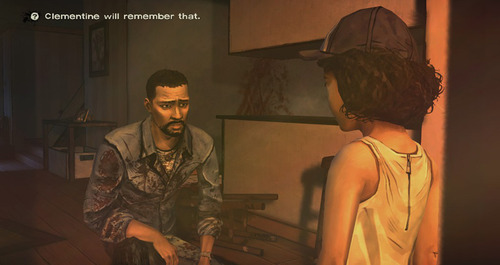 Telltale Games is a studio that has nailed the decision-consequence system. In their episodic games, you see onscreen hints when you make a key decision. For instance, the game will tell you, “This character will remember that,” after you say something important, so you know that you impressed them (or maybe pissed them off). This kind of feedback isn’t necessary, but it helps remind you that your choices matter.
After each episode, a results screen appears showing the community results. For each key decision, it will say something along the lines of, “You and 32% of players did this.” It’s fun to see whether you made the popular choice or not, and rewarding to know exactly where your actions made a difference in the story.
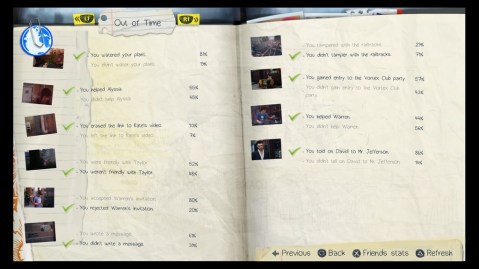 The Dontnod game Life is Strange features a similar results screen at the end of each of its episodes. What I like about this one is that it also tells you all possible outcomes. For instance, I had no idea I could encounter Alyssa in some episodes until I saw the results screen, which displayed the percentage of players who helped her.
As another example, in a critical scene where main characters Max and Chloe visit the trailer of drug dealer Frank, in my playthrough Chloe killed Frank the first time. Max has the ability to rewind time, so I rewound and retried the scene. This time, Chloe shot Frank in the leg. I continued with the story at this point. Seeing the results screen later, I noticed that most people had a clean conversation with Frank — no violence. It was interesting to see my experience there in context of what other players did.
Mass Effect
- Polarized choices (they’re even color-coded)
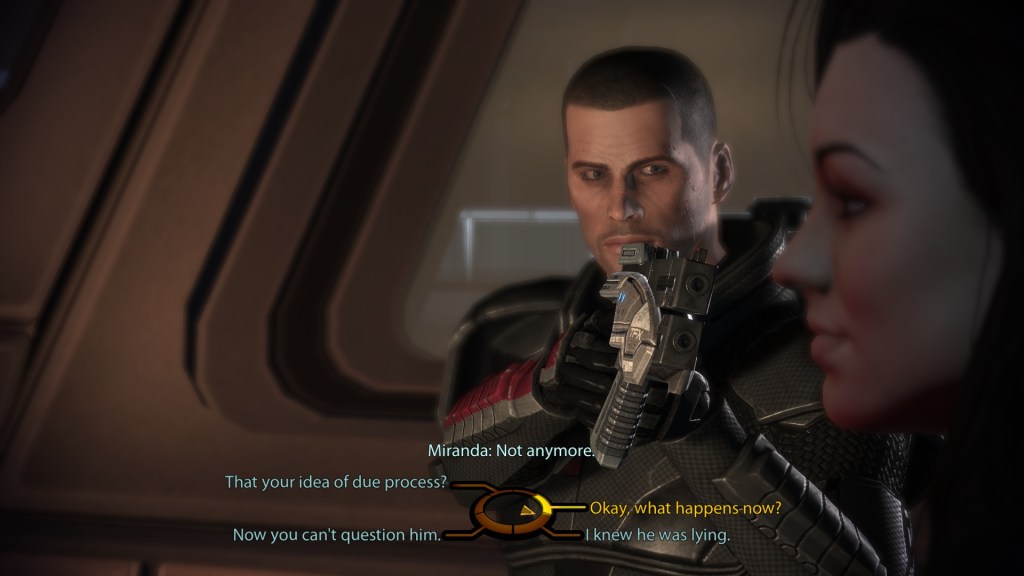
 Mass Effect is my favorite video game series ever, featuring all kinds of in-game decisions. These range from simple dialogue options in conversations to sweeping moral choices that can affect entire alien species. It’s epic storytelling, and I love it — but I know it’s decision-making system is far from ideal.
That’s because Mass Effect makes its choices feel very polarized. They’re even color-coded. You can either be a good “Paragon” or a badass “Renegade.” Choose mostly blue options, and you’re being the nice guy; go with red choices, and you’re probably punching reporters or committing genocide.
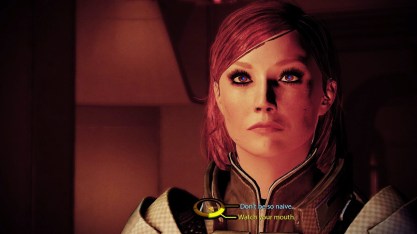 The decisions themselves are fantastic — I just don’t like having to hug such an obvious line. While my characters are usually more Renegade than Paragon, I wanted to be tough to get the job done — not borderline evil and nasty to my own friends in the game. That’s why I tended to bounce back and forth between “blue” and “red” choices. That’s fine for creating a great character, but the games sometimes reward you for nearly maxing out Paragon or Renegade choices, which means I missed out on some cool scenes or perks.
Besides that, the polarized options made me very aware all the time that I was playing a programmed video game. BioWare had set up “nice guy” and “mean guy” options, and I was choosing between them. Would results be similarly black or white?
Dragon Age 2
- Icons categorize the dialogue and decisions you can make
- Complex Friend/Rival system, which is hard to decipher as you go and makes romancing certain characters very difficult
 Dragon Age 2 has probably the worst decision-making system I’ve encountered. It’s not all bad — I love Bioware, guys, really — but it fails for me for a couple of reasons.
One is that the game features icons telling you what type of choice you’re making. This specifically refers to your character’s personality. You can be compassionate, sarcastic, or tough. They’re cool options, but sometimes I feared mixing up my answers too much. I wanted to be consistent… but that meant I was looking at icons instead of responding to in-game conversations in a natural way.
But the way bigger issue for me was how decisions affected other characters in the game. You have a party of companions in the game who battle with you. I like that each character responds to your in-game decisions based on their own beliefs and personalities — it’s just that I barely kept up with what was going on with all of them. Approval and disapproval swings wildly. You can’t impress one character without pissing off another. It’s a fine balance, which is kind of realistic but also really hard to fenagle.
The main problem is in trying to romance certain characters in the game. (I’m looking at you, Fenris.) You have to rack up enough Friendship or Rivalry points with a character to romance them. Friendship means they approve of your decisions; Rivalry means they’re against them. (Yeah, you can irk characters until they hate-crush you.) But because characters reacted so strongly to my every decision, I felt trapped into choosing very carefully — too carefully — to win over my romance option. It was really difficult. It was like I had to “play” the game’s story to get one that I liked, which doesn’t feel realistic or rewarding at all.
Dragon Age: Origins
- Natural conversations and in-game decisions
- Minor dialogue hints and post-quest (or convo) approval points as guidance and feedback (which benefits the player)
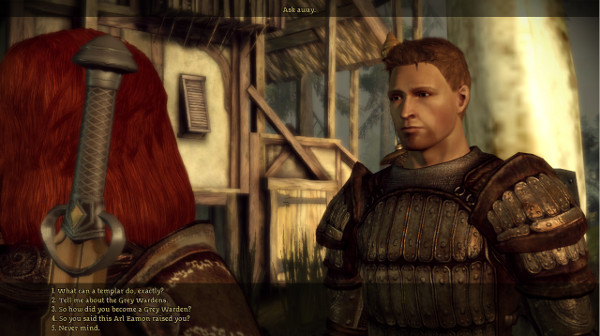 Go back one Dragon Age game and you get Dragon Age: Origins, which stands as one of the most perfect video games ever for me. The way it handles in-game dialogue and decisions is brilliant.
Open up a conversation with another character, and you have many options to choose from — none of them color-coded or icon-ridden. It makes conversations feel natural. You respond based on the information at hand, how you feel about that character, your mood. And the characters react to you in the same way.
Meanwhile, after each quest (or part of a quest), you’ll see approval change for characters based on your most recent actions. Exit a conversation, and you’ll see whether the character likes you more or not. After an important quest, you might see a +3 Approval rating from Alistair but a -3 from Morrigan, because Alistair liked how you handled the situation but Morrigan didn’t. I appreciate the feedback, and it’s gradual enough not to feel like you’re totally ruining your chances with a romance partner. It’s a nice reminder that my choices matter — yet it’s not there swaying me while I’m still trying to decide how to respond in a conversation, etc.
There are also a few minor hints in conversations about what you’re saying, which seem to be in place only so the player doesn’t trip themselves up. Specifically, you can see when you’re choosing to flirt with another character (helps you avoid it if you don’t want to romance someone) and when you end a romance (so you don’t accidentally break their heart when you actually want to keep them around). You can also see when you have the option to attempt to persuade or intimidate someone into doing what you want. This is because these are skills that you improve as you go, and you need to know which one you’re improving (and you might not succeed in your attempt if you’re not good enough yet).
It’s the perfect amount of hinting — exactly what is needed for the in-game programming to benefit the player, without interrupting the natural flow of storytelling. I believe the lack of too much in-game feedback helps me immerse myself in the experience. Because the underlying programming of my decisions isn’t being thrown in my face, the story feels more real and emotional to me.
The Witcher
- Seamless choices and consequences, with next to no in-game indication as you go
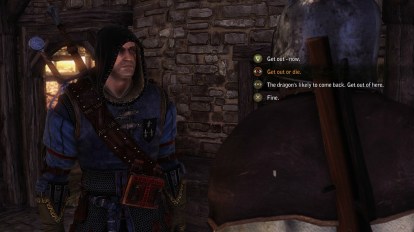 As much as I love the storytelling and decision-making in Dragon Age: Origins, I believe The Witcher series actually does it best. That’s because it keeps so much hidden. You don’t even realize you’re making key decisions, winning people over (or not), or experiencing unique consequences. You’re just trodding through the world in Geralt’s boots, no more aware of any butterfly effect than you are in real life.
There are times when the series shows you icons, such as when you’re bartering, bribing, or using a magic sign to influence someone. These are necessary for the game. There are also sometimes timed decisions. But moral choices are not color-coded any more than future consequences are spelled out.
I ’ll talk about The Witcher 3: Wild Hunt here, since it’s the one I played most recently. Often I had no idea an experience in my game was unique until I compared notes with other players. For instance, when my coworker and I were discussing something once, I realized I had no idea what he was talking about. We retraced our steps and discovered where our paths had diverged; basically, he had to go through an extra mini-quest to get something done, where I had instant help from someone I had won over earlier. It was really cool seeing how seamless the decision-consequence flow was there — we wouldn’t have even noticed if we hadn’t talked about our experiences!
I’m not saying one way of creating in-game decisions is always better than another. However, the theme I see is that knowing the consequences of my actions can be really rewarding, especially if I know a decision I’m making in the game is supposed to make an impact.
Also, it doesn’t seem like a completely seamless experience exists… at least not yet. And maybe the player needs to know the limits of a game a little to avoid frustration with it. But a game that’s at least seamless enough to make you forget you’re playing a game at all? That can be the most exciting storytelling ever.
— Ashley


 Robo♥beat
Leave a comment