
In role-playing video games — my favorite genre — having lots of freedom often means enjoying a more interesting, personal role-playing experience. Obviously, story and character development are important in RPGs, but freedom — or maybe something like customization, or more player control over in-game details — is what defines the RPG genre, in my opinion. Sometimes this freedom is the liberty to explore an open-world landscape in a massive game like Red Dead Redemption; other times, it’s more story-based, such as choosing whether Geralt will follow Vernon Roche or Iorveth in Witcher 2. But it’s gotten me thinking: how much independence do we need for an RPG to be a fun, authentic role-playing experience?
Creating Characters From Scratch?
I love RPGs that let me create a character from scratch, starting with her gender and appearance. It’s not that I mind playing a ready-made character most of the time, but being able to create a protagonist in my image (or some other, much more badass image in my head) helps me dive into the story through the playable character’s eyes.
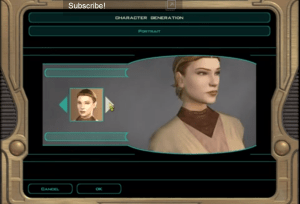
Some people couldn’t care less about this. They want to jump straight into the action, not caring at all what their character looks like or even their gender. And I’ll admit that in games like Witcher 2, the playable character is so well-developed, I don’t mind walking in his shoes… but saying that I don’t care about customizing my character makes me feel like I don’t care about the role-playing experience. After all, aren’t RPGs very much about pretending to be someone else for awhile and truly caring who they are and what they do? Freedom to create my character helps me understand and care about her as I play the game.
That’s why in Witcher 2, I relish having the ability to change Geralt’s hairstyle and armor as the game progresses. Even the smallest act of customization can help me feel a sense of ownership over the character I’m controlling, and this goes to the heart of the role-playing genre. In other words, it’s much easier for me to role-play when I’m able to customize at least some small detail of my character to my liking — even the superficial things. And if I can create my Dovakhin from scratch in Skyrim — choosing to play a female Khajiit versus a male Redguard, or customizing the appearance of my Dark Elf right down to the color of her eyes and the amount of dirt on her skin — so much the better.
Skill Trees Define the Genre
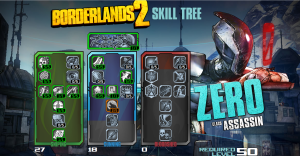
At the very least, RPGs have skill trees. Many games that only have skill trees as their RPG element are classified as RPGs, even though they have very little character development (outside of combat techniques). As someone who is not particularly interested in FPS or TPS games, I do enjoy role-playing shooters like Mass Effect and Borderlands — the first having tons of character customization and growth, the second having just skill trees. But even leveling Zer0 in Borderlands 2 to give him stronger gunplay skills rather than melee attacks makes me feel more like I’m role-playing.
Of course, the freedom to make choices when you level your character is more than a fun role-playing feature: it’s often the difference between your character surviving the obstacles thrown at him or dying a gruesome death because you failed to customize him well. But then, strategy and utilizing combat skills could make a whole other discussion…
Story Progression

In Dragon Age: Origins and Mass Effect games, you’re able to choose the order in which you complete missions. In Witcher 2, you make a choice between two paths that take you to entirely different locations with separate quests. And in my opinion, these games are the best examples of RPGs that give you choices with consequences. In DA:O, you decide the fate of two species when you choose whether to help the victimized elves or the cursed werewolves who have been at odds — or, if you’re skilled in persuasion, you can even find a solution that puts an end to the conflict with minimal bloodshed. In Mass Effect 2, you can save the cure for the genophage — a biological weapon — or destroy it, with repercussions in ME3. And these are only two of the many decisions to be made in these RPGs.
The first time I played Dragon Age: Origins, I played as myself. I was nice. I was helpful. I tried to make everybody happy without stepping on too many toes. It might have been a tad boring, but that’s the beauty of role-playing games: you can choose to inject yourself into them if you want. When I got to Dragon Age 2, I played a sarcastic Hawke and an aggressive Hawke, both of whom were very different than I am… and I loved it. My canon Shepard in the Mass Effect series is also very different with her renegade personality, but when it came to the big decisions, I made her open-minded and careful to spare as many people and species as she could, without becoming illogical. This was my way of connecting to her, in spite of our differences.
Even games like Skyrim that have relatively poor-quality decisions — or choices that don’t have noticeable consequences — still give you some fun ways to customize your character’s journey. For instance, in Skyrim you can choose which factions to join, what houses to purchase, and which NPC to marry, assuming your Dovakhin is the marrying kind. All of this freedom adds to the immersion, which is vital when role-playing in video games.
Being able to shape characters’ personalities and make in-game decisions that affect the rest of the story make RPGs fascinating to play. They often give RPGs loads of replay value, too. Since I believe the best RPGs have lots of these story-based choices, more freedom in this respect is always a good thing, in my opinion.
Should All RPGs Be Open-World?
Nowhere is freedom more evident in video games than when playing an open-world game. Though I don’t jump at open-world games and often lose interest before I finish them, I can see the appeal of exploration. I definitely feel a sense of adventure when my character swims out of her Riften house to roam Skyrim, and I also feel a strong sense of ownership over my character and in-game experiences when I’m able to personalize them through freedom of exploration.

One piece of news that caught my attention this month was a Game Informer interview with Bioware’s Aaryn Flynn, who named Skyrim as an influence on the upcoming game Dragon Age III: Inquisition. He even went so far as to basically say that open-world exploration should be a staple of the RPG genre. (You can read about the interview via Kotaku here.)
That scared me a little. I’m a big fan of Skyrim, but it’s easy for me to feel lost and disconnected when I play it. There’s a distinct lack of emphasis on story in many open-world games — and that’s why I adore games like Dragon Age: Origins that severely limit where you go and what you do, focusing on their riveting linear plots instead. Games with tight stories are the ones that keep me engaged, and being ushered along a linear path helps me feel the impact of those tales.
Reading a forum thread about an open-world Dragon Age from early this year — long before this DA3 news came out — one comment summed up the dilemma perfectly, in my opinion:
Many gamers play Bioware games for the characters and story. The two are not mutually exclusive, but the more open world a game gets the less important the story becomes… The appeal of Skyrim is the open world exploration. The story takes kind of a back seat to that aspect.
To take that further, a big problem with open-world games is the lack of meaningful consequences. My second time playing Skyrim, I made a conscious effort to complete quest lines swiftly, so that everything felt real. That meant that when my fellow Stormcloack soldiers were preparing to take Solitude just up the road, I joined them immediately for the battle, just as a soldier would have to in real life.
Of course, I didn’t have to do that, because Skyrim sort of lets you do whatever you want. I could have run around picking flowers for my alchemy experiments, traveled across the map to purchase a new house, or joined the College of Winterhold to fulfill my dream of becoming a mage… completely ignoring the Solitude battle, if I preferred. But if I had done that, when I finally wandered back to Solitude days or weeks later, the soldiers would have still been there, waiting for me to begin the battle. And that’s just not realistic. It would have totally ruined the role-playing experience for me… so in a way, open-world games that give you that much freedom actually take away from the realistic feeling of role-playing.
On the other hand, I love that in Mass Effect 3, you can complete quests in pretty much any order you want… but leave some quests too long, and bad things may happen. You have freedom, but your choices still come with consequences. And though some people complained about a lack of exploration in the Mass Effect series, I thought the freedom to land on random planets in the first game offered just enough of an adventure — yet I didn’t miss that ability in the other games, as I was too engaged in the main story anyway.
Another open-world game that I love (and am currently playing to death over Christmas break) is Batman: Arkham City. It features a sprawling urban environment that you can explore at will, taking down random thugs on your way to your next mission or helping citizens who need Batman’s aid. Though there are loads of side quests to pursue, they never feel overwhelming. And instead of getting in the way of the main story, the freedom to explore the city adds to the realism of your role-playing experience. After all, Batman and company should be able to go wherever they want, and few things break the immersion more than running your character into an invisible wall just because the game doesn’t let you explore any farther.
This may be exactly what Bioware is going for. I hope it is. After all, Bioware’s Flynn said Skyrim wasn’t the only influence on the next Dragon Age. He also went back to early RPGs, such as Baldur’s Gate and Neverwinter Nights, when discussing the exploration aspect that should be bigger in the role-playing genre. Dragon Age may have kept players on a tight leash, but it sounds like Bioware wants to return to its roots and embrace exploration again. The question I have is just how massive the world is going to be, and whether that will become overwhelming or not.
In conclusion, I’m all for lots of freedom in RPGs… but never at the expense of a well-told story. When I’m given role-playing decisions in a game, I want to know that the choices I make will have realistic consequences as they move the story forward. And whenever possible, I want to be able to customize my characters so I feel a connection with them as I immerse myself in the role-playing experience.
— Ashley


 ROBOHEARTBEAT
Leave a comment