
How believable is science fiction supposed to be?
Some sci-fi is incredibly rich and realistic. Especially when reading it, I’m able to visualize exactly how the world and all of its inhabitants — including alien races described as being completely different than anything we know on this planet — appear in this fictional universe. I get really into it.
However, when watching sci-fi and TV movies, things can get in the way of that suspension of disbelief. Things like shoddy special effects, cheesy one-liners, alien characters obviously covered in weird cosmetics and prosthetics.
This doesn’t ruin my enjoyment of science fiction. In fact, sometimes I barely notice it. However, my sister tends to comment on these things after we leave the cinema, and my mom actually makes the comments while we’re still watching the shows. (Yeah… I don’t watch sci-fi with her anymore.) It doesn’t mean my sister hates science fiction — she’s just not a fan in the same way I am. It’s almost as if she wasn’t born with the sci-fi gene. It’s all too cheesy to her.
It’s gotten me thinking: Loving sci-fi really boils down to whether or not you can believe it. Some people do, easily, no matter how otherworldly or gooey it seems. But many people — probably most — can’t get past how silly that explosion looked or the fact that those one-liners about saving the world are worse than bad pick-up lines.

What’s weird is that I totally agree with my sister’s opinions on how cheesy things can be in sci-fi. Sometimes it’s technology needing to catch up with people’s imaginations to really bring alien races and intergalactic battles in outer space to life onscreen. But other times it’s just the genre that gets a little overly emotional at times. Heroes can be sappy. And that’s fine. I can suspend my disbelief for all of these things. I mean, Quark looks so real in Deep Space Nine, right?
In some ways, I’ve trained myself to believe in these other galaxies, no matter what. Let’s take Doctor Who as an example: The first time you watch it, if you haven’t been exposed to these types of shows before, it seems incredibly cornball. But the more you watch it, the more invested you become in the story and characters. You stop caring about the fact that the Silence look a little stereotypical — you’re really terrified of them because of what they do. You don’t overthink how the TARDIS works or how old-fashioned all of those controls look (or maybe you do), because that’s not what the TARDIS is all about. That’s not what Doctor Who is all about. You take the show for what it is, finding charm in its retroism and cheesiness while overlooking any deficiencies in areas like special effects. But I’ll be honest — it can take a little time to get there.
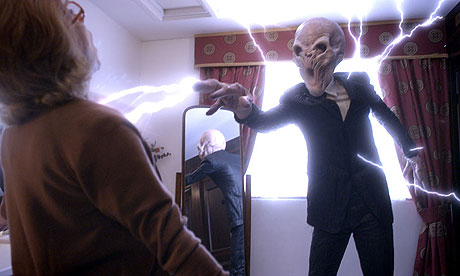
I guess my “training” happened many years ago, so I have no trouble jumping into any science fiction show, movie, or game. You don’t have to tell me how sappy Doctor Who is. The sentimentality is part of what I love about it, damn it!
But it’s gotten me thinking, why is it that I can overlook these things — that I’m immune to the lackluster effects and the obvious alien prosthetics — while others find them almost intolerable? Not everyone has the ability to suspend their disbelief and really invest themselves in a fictional world so different than our own. I guess it’s a skill that requires some honing. Or maybe some people aren’t born with that gene.
I hold nothing against people who can’t get into science fiction. It’s cool. To each his own. I’m just really glad I was born with the sci-fi gene.
— Ashley


 Robo♥beat
Leave a comment