

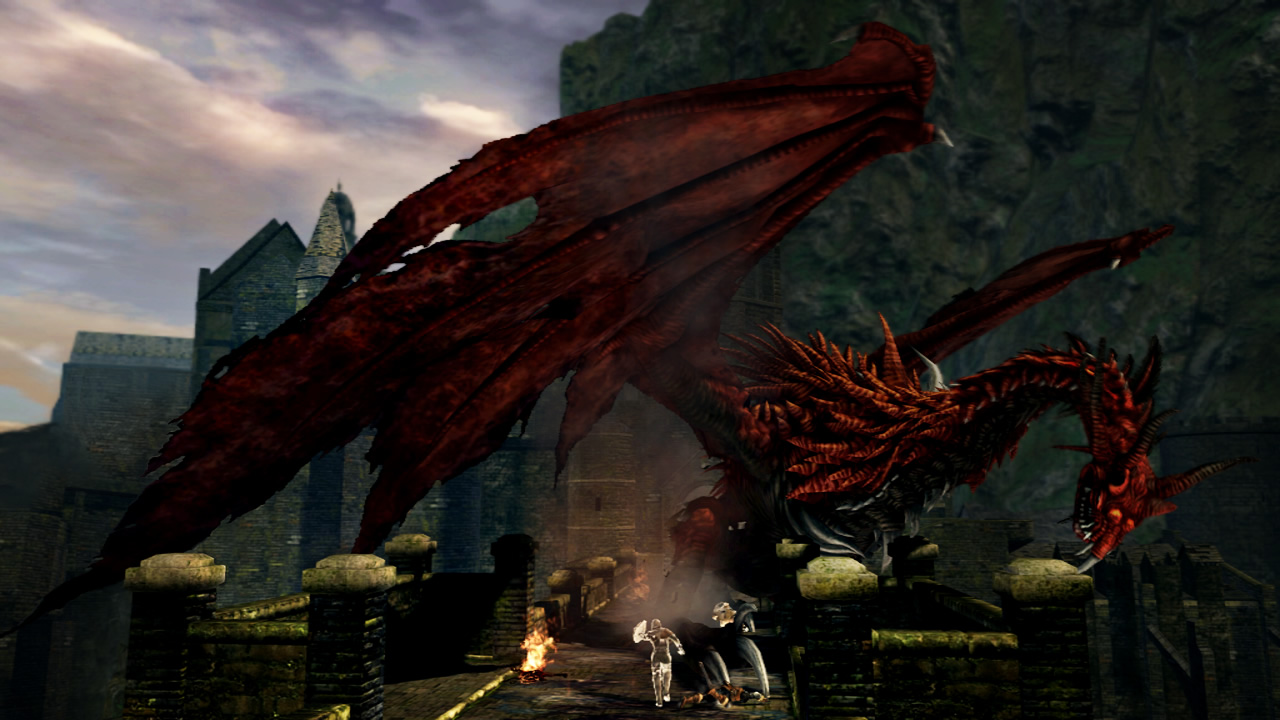
Whether they’re the giant serpents of antiquity or the fire-breathing variety first depicted in Beowulf, dragons have definitely had their fair share of world-ravaging in fantasy stories. Some are magical, treasure-hoarding enemies that coast like bats across the sky, looking for living meals. Other times, they’re benevolent, hoarding wisdom rather than gold. Either way, many can speak.
My favorite dragons are the ones that are rare in their worlds. They may be revered as ancient gods or aid in battle, and their scarcity makes them feel sacred somehow. For instance, I love the way they’re depicted in A Song of Ice and Fire/Game of Thrones; there’s even a sense of wonder and trepidation surrounding the dragon eggs before they hatch. Besides the awe factor, dragons being rare or even extinct makes more sense than having them overrun a fictional world, as it must be difficult for humans (and similar races) to coexist with powerful dragons threatening to wipe them out. At least that’s my theory.
When dragons are scarce, they’re game-changers. But even when they’re just one of many monsters (such as in the Witcher series), they are typically the greatest threats, the ultimate bosses… and one of the most predictable sights, whether they breathe fire or surprise you with some variation on that.
All of this makes me wonder whether dragons’ luster is wearing thin and how world-builders can revive them in our tired imaginations.
Skyrim’s Free-Roaming Dragons

When Skyrim came out in 2011, many people were excited at the prospect of dragons flying across the in-game world and attacking at will for the first time. It gave the game a sense of spontaneity and danger. This is much different than how video games typically utilize dragons, which is as bosses to take down at specific points in the story. (My favorite example is the archdemon in Dragon Age: Origins, the ultimate boss — though the DA series has other, optional dragon bosses to take down at different points, too.)
But the novelty of free-roaming dragons wore off for me in time. After playing Skyrim for awhile, I found the dragon fights tedious, and when I saw that shadow in the sky or heard a far-off screech, I typically started running in the other direction to avoid the fight — not because I was afraid the dragon would kill me, but because I didn’t want to shoot arrows at the thing for five minutes straight just to move on with my in-game life. (Of course, if I needed the dragon bones for money, I reacted much differently…)
Fortunately, Skyrim’s main questline adds some originality to the dragons — and that goes beyond just absorbing dragon souls and learning shouts. The Dragonborn DLC (which I haven’t played myself yet, even though I’ve seen hours of it online) takes the dragon trope in a new direction to make it even fresher. To be fair, my problems with the prevalence of dragons in Skyrim may be out of the ordinary, as it’s clear that dragons are a major draw for the game… yet even among my biggest Skyrim-loving friends, I notice excitement over a dragon fight wane about halfway through — as the dragon takes flight yet again — and that dull fatigue flares at having to shoot the beast back onto the ground already.
Dragons, Dragons Everywhere!
For me, dragons are simply much too common in Skyrim — and the same could be said for dragons in fantasy fiction in general. They’re so ubiquitous, they may just be a tad overused. When I researched this, I found an interesting Escapist forum thread posing this exact question when Skyrim was first released. For the most part, the initial reaction was that dragons are awesome… and saying otherwise kind of makes you a downer.
But Patrick Rothfuss, author of The Name of the Wind, thinks otherwise in an interview with L.A. Times. Though he agrees that dragons are totally cool and archetypal, poor storytelling can make them seem trite. As he puts it:
“The problem with dragons is that everyone uses them. All the time. When that happens, they become commonplace. A lot of people think you can just throw them into a story and suddenly whatever you’re writing is 28% cooler. But all that does is make dragons into some boring cliche.”
He even talks about playing a game that he played in which he fought many dragons. The first fight was intense, but after awhile, all that drama wore off, leaving him bored with the fights. “When that happens,” he says, “someone has really dropped the ball in terms of storytelling.”

Dragons That Matter
It all comes down to fresh storytelling. When I start reading a fantasy novel or turn on a video game that has dragons, my mind is already packed with the cliches. I expect a big reptilian creature with scales and wings that flies across the sky, breathes fire on people, and possibly talks. Whether he’s in chains or a wild animal, he’s probably considered to be a dangerous beast. (Even in BBC One’s Merlin, the relatively benevolent dragon still sort of wants to destroy Camelot.)
When my expectations are met, I’m not exactly disappointed… but I personally don’t grab stories just for these dragon cliches. I’m probably reading/watching/playing for some other reason, and the stereotypical dragons don’t sway my opinion of the story one way or the other.

On the other hand, when a book (or game, etc.) surprises me with a new way of presenting dragons, I fall in love with that story. Sometimes I even pick up a story because it deals with dragons differently. My favorite example is Naomi Novik’s Temeraire series, beginning with His Majesty’s Dragon, which weaves history with magic in a retelling of the Napoleonic Wars — only in this world, dragons are used for aerial warfare.
To be fair, I believe elves, dwarves, and zombies are more overused in fantasy and science fiction than dragons, but the dragon has more flexibility. No strict definition limits the dragon; in fact, “Eastern dragons” differ from the ones we know best in the west, often having a more serpentine appearance sans wings. There’s so much more we could explore. And even though taking down a mean-spirited dragon in a video game makes me feel like a badass, I’d love to see dragons given fresh traits and roles in fictional worlds.
— Ashley


 ROBOHEARTBEAT

Leave a comment