
One of my side quests in life right now is learning Spanish.
My husband is from Mexico, and we want to raise our son to be bilingual. Between that and all of our trips to Mexico to visit my husband’s relatives, it’s definitely time for me to get after this goal!

My Journey Learning Spanish
Learning a language as an adult is hard. Anyone could tell you that. I started in college, dabbling with a few Spanish language books but quickly giving up. (At the time, I was actually studying Russian, and Spanish was not my main quest.)
When I met my husband, I decided to start learning Spanish in earnest. I tried Duolingo and Pimsleur. But what I tended to do is, two months before a trip to Mexico, do a “crash course” in Spanish using YouTube videos and whatever programs I could get my hands on. I’d ingest a bunch of Pimsleur lessons, try journaling in Spanish for a few entries, and then head to Mexico feeling frustrated that after all that cramming, all I could manage was, “¿Hola, cómo estás? Oh, muy bien, gracias.” I’d sit at dinner tables like a lump on a log, unable to converse, with no idea what anyone was talking about.
Even though my husband’s family is incredibly sweet and welcoming — and some of his cousins speak English! — I felt very isolated. The problem for me is that I want to get to know my husband’s family — to put my best foot forward, too — but the language barrier makes me feel like a different, less interesting, less welcoming version of myself. I want to say, This is not me! It’s just my lack of Spanish that’s making me this way!
In any case, in 2025 I got pretty serious about learning Spanish and made a ton of progress between April and December. I have several programs to thank for that!
My Favorite Spanish Learning Apps & Programs
Obviously I’ve tried lots of apps and online courses over the years, but these are the ones that helped me the most, particularly in 2025 when I finally started making progress with my Spanish.
- Pimsleur: Audio program that is fantastic for basics and gives you excellent pronunciation!
- Language Transfer: Another audio program that teaches you Spanish based on the English you already know (Latin roots!), and thinking through rules and patterns rather than rote memorization. Very similar to…
- Spanish with Qroo Paul: A YouTuber and Spanish teacher who focuses on learning Spanish in chunks so you can “get the train moving” as you construct sentences on the fly, a very practical and useful strategy.
- Dreaming Spanish: Learning Spanish through comprehensible input (listening to Spanish that is in that Goldilocks zone for learning, where you can understand most of it but are also learning new words and naturally picking up on patterns). I find this method really easy and enjoyable, the best for being able to understand spoken Spanish fairly quickly.
These helped me progress from probably an A1 to a B1 level in eight months, which I was happy with. (My goal is to reach C1 level.) If you don’t know about CERF language learning levels, you can learn more here.
All that said, language learning gets stale after a while. It just does. Saying “I have a hat,” with Pimsleur and studying verb conjugations and watching comprehensible input videos about how to make avocado toast is all well and good… until I start yawning.
Sometimes I just need something different.
Level Ups in Learning Spanish
One of the things I did was read Harry Potter and the Sorcerer’s Stone in Spanish. When I tackled this challenge in the summer of 2025, the book was way above my level. I listened to the Spanish audio while I read along (in Spanish) on my Kindle, looking up unknown words and doing my best to get the gist of the story. There were a couple of scenes I completely missed because I did not understand enough to realize what I was hearing. But overall, because I know the Harry Potter story so well, it was about 50% comprehensible and, let’s say, about 70% enjoyable.
Then I got into Dreaming Spanish and discovered something that completely hooked me on the method. Not just the Dreaming Spanish crew, who are amazing and come out with new videos on all kinds of topics all the time. But also another streamer and language coach with his own YouTube channel and Patreon. It’s Spanish comprehensible input with a unique angle: video games.

The co-creators are Martin and Mila, and Martin’s gaming channel is Spanish Boost Gaming. While Martin and Mila create many types of content — including a fun, rambling podcast — Martin primarily streams video games in slow Spanish. Most of the time, the Spanish is at a low intermediate level, which is perfect for me right now. I can understand most of what he’s saying, and my brain gets used to the Spanish the more I listen to it. It’s like going to the gym for my brain — and because it’s video game content, I have a blast.
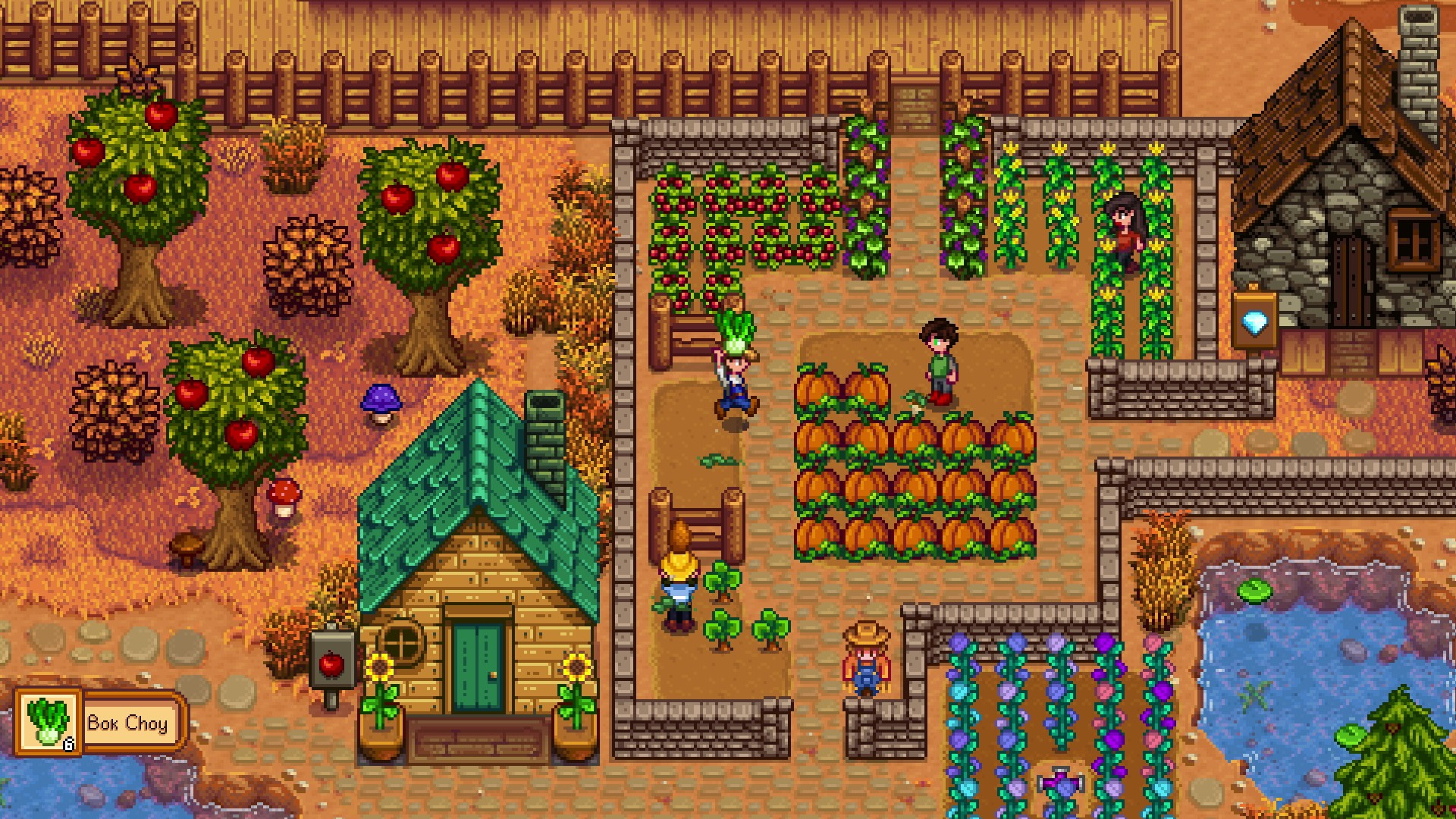
I’ve watched his entire Stardew Valley series on YouTube while playing Legos with my son. (I love that it was one I could have on in the background, since Stardew Valley is tame enough for my kiddo to look up at while he plays.) I’ve also watched a lot of his Skyrim playthrough on my own time, and for a while I subscribed to the Spanish Boost Patreon to watch Martin play God of War. Mila also creates fantastic lifestyle and travel content, adding more variety which I love. (I still need to listen to her podcast — that’s next on my list!)
With his gaming videos, Martin’s vibe is very inclusive and funny. He makes a lot of jokes, and it feels good to understand them in another language. The fact that I can see what’s happening on screen in the game and then hear related words makes it easier to understand what he’s saying. (You can guess that, watching Stardew Valley, I quickly learned how to say “water the plants” in Spanish!) I also enjoy listening to his podcast for its philosophical slant; he is into philosophy and can easily switch from joking around to discussing a philosophical question about the nature of life, just like that. Which is really fun.
Another thing I do: when Martin poses a philosophical question on his podcast, I pause and record my answer in Spanish first. It might be slow. I might struggle to find the words. I might explain around a concept or use simple language. Oftentimes, I record myself two or three times as I get better and better at saying what I want to say. But it’s a useful little challenge that works well with some of his content.
I’m thinking of playing video games on my own while speaking Spanish to myself next. I won’t record myself, obviously — but just talking out loud, cracking a few jokes and pondering aloud what I should do next will help me improvise Spanish based on something I’m doing. It gets my tongue used to the language and my brain more accustomed to the words I need in everyday life. Even when that life is set in a video game.
I just wanted to share Spanish Boost in case any of you are learning the language and want something fresh to help you “study” without studying! I love how Spanish Boost combines video games with language learning in such a fresh, creative way.
The internet can still be a great place, and Spanish Boost is a fantastic example of something innovative, helpful, and inclusive online!
Have you learned another language, or are you learning one now? What was your favorite way to learn?
– Ashley
Leave a Reply