
Moon (2009) is as much a thoughtful mystery as it is a whirlwind psychological profile of a single man, alone on the moon. It has become one of my favorite science fiction films ever.
In Moon, Sam Bell (Sam Rockwell) is finishing up his three-year contract with Lunar Industries, which has him harvesting fuel on the far side of the moon — a solo gig. His only companion is GERTY (Kevin Spacey), the ever-calm and friendly “robotic assist” A.I. A fried satellite makes live communication impossible; he relies on recorded messages from his wife and daughter to keep him going. He admits that three years is “way, way, way, way too long” to be alone on the moon… and that he’s been talking to himself on a regular basis.

Other than that, he’s alive and healthy and ready to return to Earth when his stint is up in two weeks. The problems begin with mysterious computer glitches. Then he starts seeing things. One hallucination of a woman on the moon’s surface causes him to crash his harvester. When he awakens in the infirmary, he stumbles out and overhears GERTY having a live chat with someone on Earth. This prompts him to sneak out and investigate the crash site, where he finds something inside that totally changes the game for him.
It’s difficult to discuss Moon without giving away spoilers, so I’ll stop there. This film is a science fiction mystery, slow-moving but wrought with inner tension. Director Duncan Jones has only made two movies as of yet, both of them science fiction films. (Moon was his first.) He seems to be one of those rare directors who produces little but means a lot with every project.
Without giving away more of the story, I’ll highlight the other things that make Moon such a refreshing sci-fi film…
Cinematography
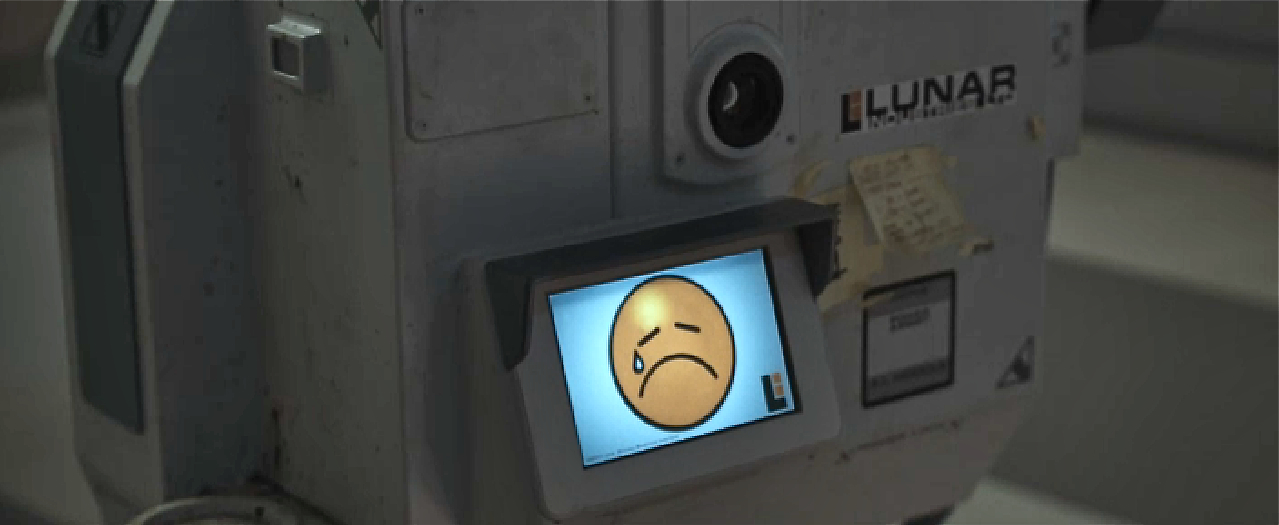
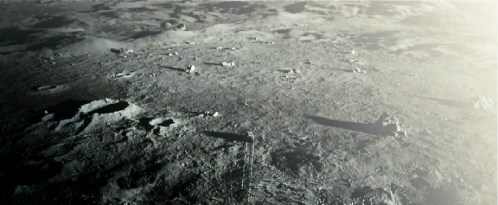
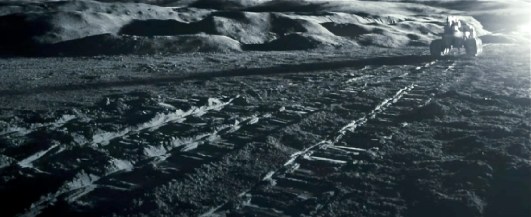
While watching this film on my computer, I could not seem to stop pausing to snap screenshots. Small things like GERTY’s face shedding little pixelated tears had me pausing. Vast, lonely landscape shots of the moon had me pausing. Even shots like Sam being sick in a toilet have perfect framing, with his hopeful, handwritten smiley faces — the ones counting down to his return to Earth — looking down on him and making the whole scene more ironic and heartbreaking.
In short, someone took their time with this movie, preparing every shot with emotional care and artistry.
Music
The film’s score consists mainly of solo piano work by Clint Mansell — a soft, minimalist sound that highlights the isolation of being alone on the moon. Other parts of the score have more melodic piano work with strings; some sections are strictly drawn-out tones that create a haunting tension.
Really, the only way to appreciate the score is to listen to it.
Performance
Many people believe Sam Rockwell should have won an Oscar for this performance. Other than a few recorded messages and Spacey performing GERTY’s voice, Rockwell completely carries the film — and he’s not limited to just a single, well-worn personality. The role of Sam Bell requires a fatigue and loneliness, with eccentricities born from too much time spent alone.

Rockwell captures that perfectly. Always moving, his actions speak as loudly as the dialogue in explaining what Bell is thinking and feeling. His performance also has a surprising, refreshing sort of humor, which may hark back to Rockwell’s background in more comedic films. Even Sam angrily shouting, “No!” comes off as funny in the most unexpected way.
It’s telling to learn that Jones was considering Rockwell for another film, with a script that both of them loved. As they hit it off, they began discussing Rockwell’s desire to play a working class character. They considered sci-fi films from the late ’70s and early ’80s, when most protagonists were blue-collar workers — the average Joe angle that helped ground these science fiction films in reality. These ideas blossomed into Moon. Jones went away and wrote Moon‘s script for Rockwell, making it as delicious as possible to ensure that Rockwell would bite.
In conclusion, this is not another action blockbuster set in outer space. This movie is much more about Sam Bell’s inner space. Sure, it’s a mystery. It’s about one last chance to live a free life — that desire that makes us human. But it’s also about a man grasping for an identity. Pitting Bell against himself in a very physical way, Moon succeeds at turning that inner conflict inside-out.
— Ashley


 ROBOHEARTBEAT
Leave a comment