
When I first read Project Hail Mary by Andy Weir several years ago, I thought it was one of the best stories I’d ever read.
But when I heard they were making it into a movie, I was uncertain. The story is about a human astronaut’s friendship with an alien that looks like a rock with legs. So how on earth—how in the universe—would a film adaptation ever work?
Then I heard how much love Ryan Gosling poured into the project, and I breathed a sigh of relief. I even got a little excited.
Fast forward to this past weekend: I saw one of my new favorite movies. I went into Project Hail Mary with very high hopes, and it fulfilled every one of them.

So what is Project Hail Mary all about? Ryan Gosling described it well in an interview with CNN:
You go to another galaxy, make best friends with an alien, and you save the world.
That’s the story in a nutshell.
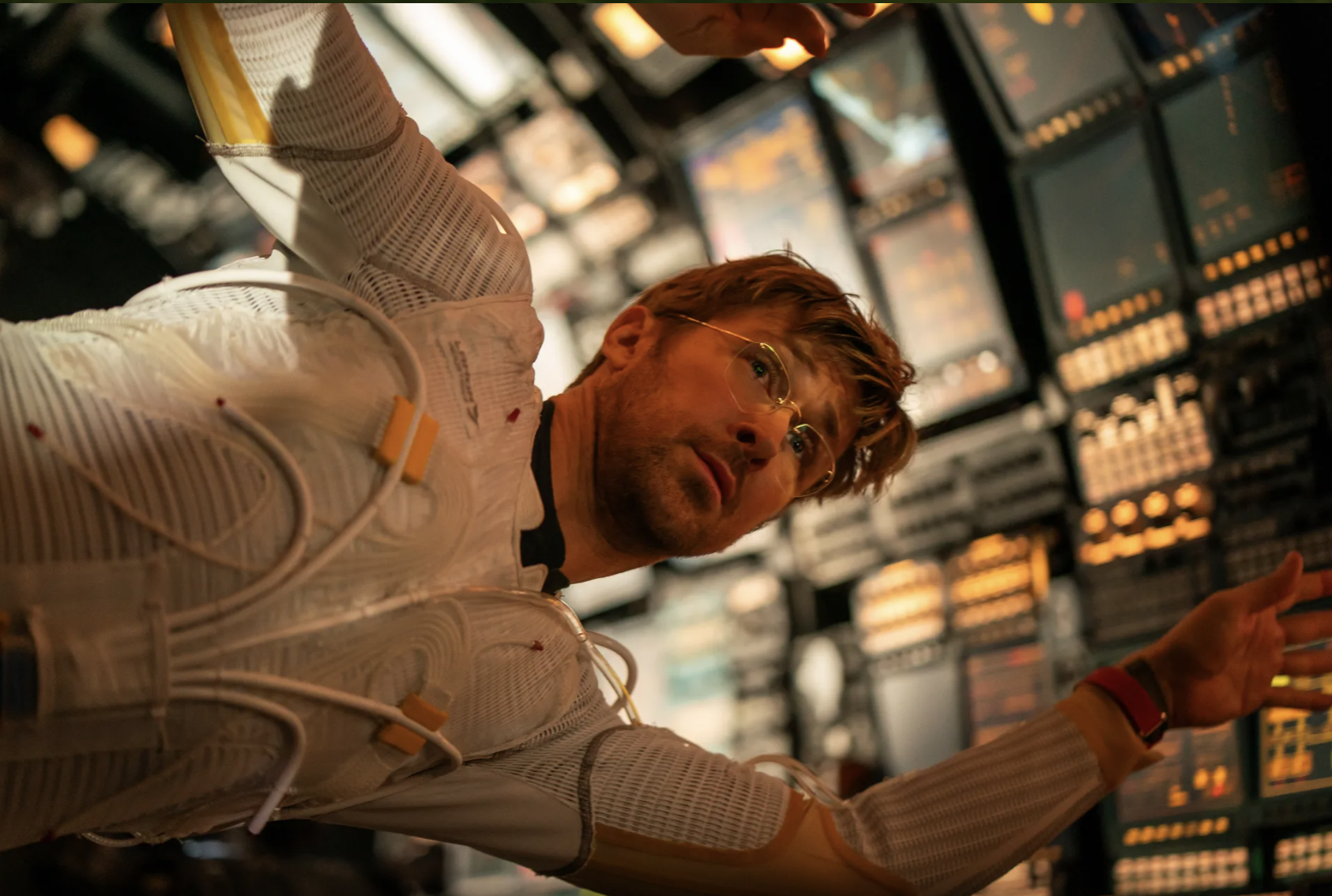
Project Hail Mary opens with science teacher Ryland Grace waking up alone on a spaceship, lightyears from Earth, with no memory of how he got there. Slowly he pieces together that he’s on a desperate mission to save Earth. An alien microorganism called astrophage is eating the sun, slowly dimming it and threatening to plunge Earth into a catastrophic ice age. His crew is dead. He’s utterly alone out there.
Or is he?
If you’ve read the book, you know what’s coming. He soon encounters an alien ship and realizes he’s not alone.
What follows is a story about a reluctant, ordinary man carrying the weight of humanity—and the extraordinary friendship he finds along the way.
Project Hail Mary: Book vs. Movie Script
Author Andy Weir sent Ryan Gosling the Project Hail Mary manuscript before the book was even published, asking him to produce the movie version. Gosling ended up starring in it too, and brought in Phil Lord and Christopher Miller to direct. Then someone already familiar with Weir’s work joined the team: Drew Goddard, the screenwriter who adapted The Martian years before.
As a writer, I’m a sucker for a good script. You can’t have a good movie without one. And I love two things about Goddard’s Project Hail Mary script.
The first is how understated it is. There are no dramatic monologues, no over-the-top dialogue. Less is more, and that restraint gives viewers room to feel the story rather than be told how to feel it. Sometimes a single line or look is all it takes for these two characters to have a genuinely moving exchange.
The second thing I love is how faithful the Project Hail Mary script is to Weir’s book. Goddard clearly understands what makes this story special and protects it. In an interview with The Credits, Goddard explains why he chose to keep a pivotal plot twist in the movie version:
I also knew it was the sort of thing that had to be protected, because I’ve done this enough now as a screenwriter to know the interesting things tend to get squeezed out if you’re not careful, because they’re different, and this was different.
As a reader who loved the book, that quote should instill some faith. Goddard knows how to not only keep the book’s magic alive, but brighten it for the big screen.
What Works in Project Hail Mary (And What to Expect If You Haven’t Read the Book)
There is so much to love in this movie, from the visuals to the characters to the acting.
First off, the alien character Rocky is real—not CGI—and that was exactly the right call. It grounds the movie and should help it age well. The visual effects throughout are excellent too. Gosling floats convincingly in zero gravity, and a thrilling spacewalk sequence looks genuinely real. Cinematographer Greig Fraser’s work is stunning; he clearly engaged deeply on set to make everything feel visceral and grounded. (I love hearing more about his work in this Kevin McCarthy interview with Ryan Gosling.)
Rocky as a character is also handled with real care. The filmmakers preserved his unforgettable vocal signature without overdoing it, and added visual touches that make his personality land even harder on screen, like Rocky dressing up to celebrate something, and the thumbs-down instead of a thumbs-up that becomes part of the pair’s private language. These are the kinds of details that reward readers while welcoming newcomers.
One addition I especially loved: the room where vast Earth simulations play on the walls. It does so much quiet work to show us Grace’s homesickness, tethering the audience to the world he’s trying to save, and bonding Grace and Rocky in a way that feels organic. Because as science fiction as this movie is, it’s fundamentally about our love of Earth and our longing to preserve it.

The acting throughout the movie is top-notch too. Sandra Hüller as Eva Stratt is a genuine highlight. She’s all-business at first, but there’s a dry warmth underneath. She believes in Grace deeply, and their opposites-working-together dynamic adds real texture to the story. She carries the themes of bravery and sacrifice in a way that sneaks up on you.
I also love the additional movie character Officer Carl, a deadpan security guard who perfectly plays off Grace’s offbeat optimism. Played by Lionel Boyce, he keeps the first third of the film funny and grounded while Grace runs his science experiments.
And Ryan Gosling is remarkable. Honestly, I never pictured him in this role when I read the book. But he nailed it—Grace’s quirky energy, his humor, his honest emotion. It might be an Oscar-worthy performance.
The only real caveat I have for readers? The movie streamlines the science quite a bit. The Martian felt nerdier to me, because it leaned into the technical problem-solving of surviving on Mars. But Project Hail Mary keeps its focus on the friendship between Grace and Rocky. There’s less science humor and more warmth and silliness; they’re just two bumbling scientists trying to salvage their near-failed missions together. Rocky’s world is also pared back; you don’t learn much about the Eridians. But it works, because Grace and Rocky are the heart of the story, and the film embraces that fully.
The Verdict: Project Hail Mary is One of the Best Sci-Fi Films in Years
There’s nothing quite like sitting alone in a dark theater wiping away tears—and that’s exactly what happened to me. Not because the movie is sad, but because it’s such a beautiful story. Bittersweet. There’s happiness and nostalgia, comedy and tragedy, homesickness and the pain of loving things that have to end.
Project Hail Mary is, at its core, a story about friendship and bravery. It’s somehow lots of fun and incredibly moving in the same beat, capturing the human experience in such a unique way. I just saw it two days ago and am already dying to go see it again.
Read the book if you haven’t—it’s one of the top five books I’ve ever read (and I read a lot—just ask my husband).
But don’t miss out on the big-screen experience. There is at least one epic sci-fi scene that makes it worth venturing out to the cinema. (Practical note for fellow busy parents: my husband and I couldn’t get a babysitter, so we each went to separate showings on the same day. Highly recommend—we had a great time discussing it that night!) And even if you come in fresh, never having read the book, this movie stands on its own.
I love that Project Hail Mary the movie is bringing this incredible story to an even bigger audience. I even recommended it to my mom, who’s not your typical sci-fi fan—because I think everyone should experience this story at least once.
— Ashley
P.S. I’d love to hear your thoughts on the book, the movie, or both! How do you think the film held up to the book? Do you love this story as much as I do? Let me know in the comments. :)
Photos: All screens from the Project Hail Mary website.
Leave a Reply