
Any time a video game lets me play with magic, I take it. When given character class options, I almost always go with mage… or the sci-fi equivalent.
Even when I opt for archery in games like The Elder Scrolls V: Skyrim, I often try to include magic in the mix. I once built a two-handed warrior who wielded a badass battle axe part-time — the rest of the time, she put away her weapon in favor of pure magic. Another time, I went with a spellsword type. As an archer, I enchant my bows. I play with potions. I create and lay traps. I pretend I have biotic powers in Mass Effect so I can lift enemies into the air to shoot them while they’re most vulnerable.
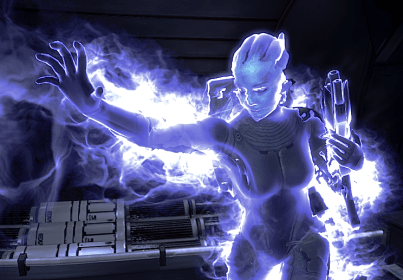
Magic is often that otherworldly element in a video game that lets you do the impossible. It helps transport you out of this life and immerse you somewhere else for awhile. It’s what I love about my fantasy. And even in science fiction, the futuristic science is often a guise for magic.
I’ve been playing Dragon Age: Inquisition lately and restarted as a mage. The archery route I initially took just wasn’t doing it for me this time. The attacks felt a little repetitive… but as a mage equipped with a magic staff, I’m able to do everything from heal my companions to shoot lightning from enemy to enemy.
Dragon Age lets you level up your mage in several schools. The options here are Spirit (healing abilities), Storm (thunder and lightning), Winter (freezing powers), and Inferno (fire). You can mix and match as you please — there’s no being locked into a single school.

These magic categories are pretty common in video game powers. Sometimes there’s a dark or light magic, but usually the types of spells you can cast involve lightning, ice, or fire. Healing is often a supporting ability, too.
Another common type of magic is death magic. Necromancy can animate corpses to fight alongside you, or simply cause enemies to tremble in fear of death in an unnatural way. In Dragon Age, blood magic gives its users extra power when they sacrifice people to wield it.
What I like about Dragon Age is that you can take a party of fighters with you. This lets me level up my mage in support abilities, such as healing and crowd control. For instance, chaining lightning to shock opponents is really satisfying. The fun thing about crowd control is that you can hit multiple targets with a single spell — it may not kill or even injure them, but being able to stun an opponent can give your party precious time to swoop in with more powerful attacks without risking their own lives. (This can even let you take on enemies that are much stronger than your party, if you’re very careful.)

For offensive abilities, I tend towards winter spells. There’s something really rewarding about ensconcing a target in ice, then commanding a party member to shatter them into a million little pieces. Ice spells often immobilize enemies for brief periods of time, since they’re literally frozen in place. It makes this type of magic great for party play, when you can take advantage of the extra time to set up additional attacks with other weapons.
A good strategy for me usually involves entering the battle first, using a crowd control spell to disarm opponents in some way, and then providing support with healing and boosting spells to the rest of my party while they engage the enemy. Whenever an ice spell recharges, I freeze targets. I keep the crowd control going as long as possible until my team takes down every enemy in sight.
Are you into magic in video games? If you play as a mage, what’s your preferred school or style of magic?
— Ashley


 Robo♥beat
Leave a reply to Ashley Hagood Cancel reply