I have a soft spot for playing a hard-ass in video games. Anytime I get dialogue choices and moral decisions in games like Knights of the Old Republic, Mass Effect, inFAMOUS, or Telltale Games series, I go Sith on everybody. I don’t like to persuade with my heroism; I resort to threats. My characters call people on their bullshit, intimidate to get respect, and act like they own every dungeon or spaceport they walk into. It’s really fun, in part because that’s not at all how I would act in real life.
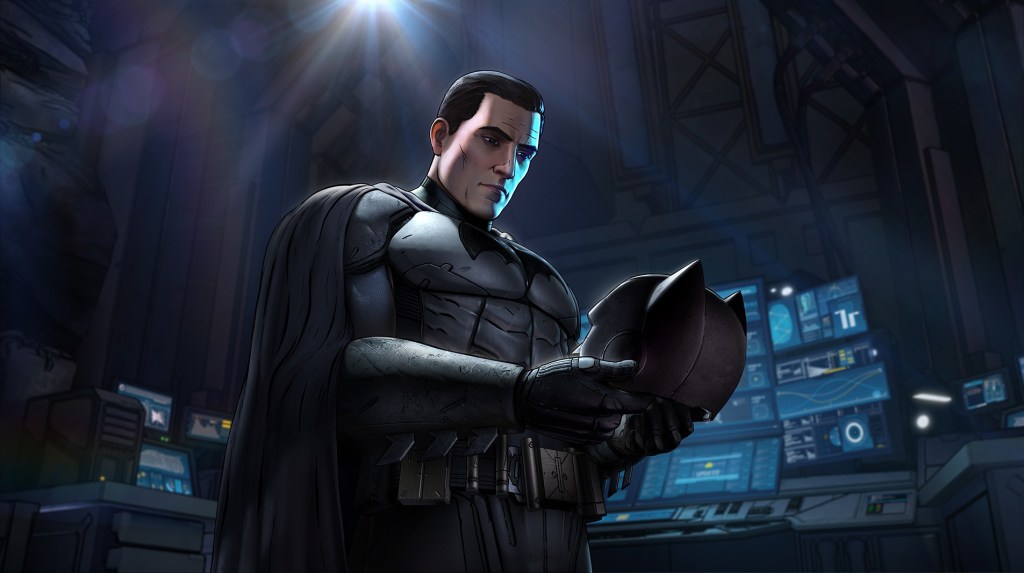
But playing Telltale’s Batman series, I decided to play the hero like I’ve always seen him: a good guy who believes in the law.
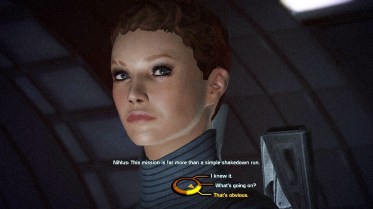
First off, don’t think that my other characters are bad. They’re not. They’re heroic in their own ways — renegades with big mouths who actually have their hearts in the right place. That’s how I like to play my Mass Effect Commander Shepard, for instance. She bristles when reporters pry into her affairs, plays bad cop whenever she gets the chance, and isn’t afraid to poke somebody in the shoulder to get their attention. But she doesn’t commit genocide. She doesn’t insult the people she cares about. She’s trying to do good, just with her own tough spirit… and questionable methods.
But in my mind, Batman is more of a classic hero. He wouldn’t punch a reporter the way my renegade Shepard does. He wouldn’t risk innocent lives while getting the job done, the way inFAMOUS‘s Cole and Delsin do. I can’t pretend I’m an expert on Batman’s character, as I know him mainly from a couple of comics and a few movies — but I like that he’s a vigilante working with good cops like Gordon to bring people to justice, not just delivering his own.
That’s why I decided to play Batman as a truly good guy. Half of the series, he’s in full Batman cape and cowl, chasing down criminals; the other half, he’s Bruce Wayne, struggling with bad public opinion and his family’s dark past.
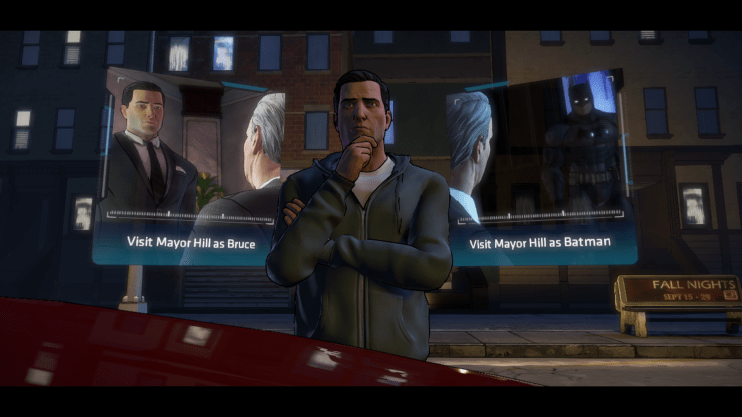 In both scenarios, I made Bruce even-tempered and insightful. He didn’t yell at people, insult or threaten — he saw the good in everyone and believed in the criminal justice system. It was fun, playing a hero as a real hero. It also meant that he could get really, really cheesy at times.
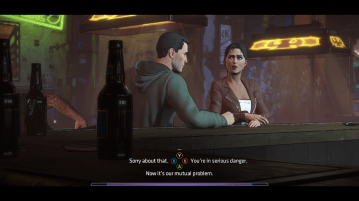
As Bruce, he pushed friends and enemies to see their own good sides in numerous conversations. Talking to Selina Kyle — a.k.a. Catwoman — he insists that she’s more than just a thief, that she saved his life because deep down she’s a good person. When his friend Harvey Dent, running for Gotham mayor, calls him to say that he’s going to turn on him for the publicity, Bruce shrugs and says it’s cool, he gets it. No matter what Harvey does to him, he takes it like a champ because that’s what friends do, and he believes in Harvey through it all.
Meanwhile, when he dons the cowl by night, Batman doesn’t beat people into submission or threaten to kill them. Even a man as terrible as the mobster Falcone deserves justice from a judge and jury. So he keeps his fists in check. He tries to reason with people — even the series’ main villain, in the very last episode. He even saves criminals from death when he can.
In situations where I could choose between action and thought, I tended to choose the thoughtful approach, too. For instance, at one point Bruce can either pay off the cops to let him through a barricade or ram his car into the barricade, and I chose the former option — so did just over half of players, according to the game stats. In another moment, Batman chooses to expose his identity rather than attack — and some 70 percent of players went that route, too.
Of course, the character of Batman doesn’t have to be so perfect. He can be pretty sinister in some iterations, and I actually find superheroes like Captain America and Superman much more traditionally “good guy” than Batman, who wears black and tries to strike fear in the minds of criminals while simultaneously being a symbol of hope. But what can I say, I like Batman being earnest and civil this time.
 The biggest insight I drew from this playthrough is that despite the cheesiness of hearing Batman say things like, “I know you’re better than that,” to bad people, being this nice felt natural to me. It was like a relief, not having to choose the insult option and see how it played out, whether it pissed somebody off, whether my character would lose a friend or ally or start a war. It felt like a real, old-fashioned hero’s story playing out on the screen.
It’s interesting, how we have this inclination to be good, to do the safe thing, to play it smart. And also to be the hero. I honestly believe that most of us tend towards kindness, and the fact that most players choose “Paragon” routes in video games seems to support that idea.
The fun of playing “bad cop” in a video game, for me, is that it’s very different from the real me. I wouldn’t be able to be that tough in real life. Yet I can’t help but keep my characters’ hearts in the right place, because otherwise I just feel bad about it.
That’s why playing Batman as so traditionally good in this series felt so refreshing to me. I can’t promise I’ll always act like such a role model in games, but when playing a classic superhero like Batman, I kind of like being cheesy about it.
— Ashley


 Robo♥beat
Leave a reply to Ashley Hagood Cancel reply