When I watch a TV show, I love characters with a little moral ambiguity. Fortunately, science fiction television is packed with conflicted characters. Every decision they make says something about their trembling inner state. Sci-fi is very much about big ideas, but without stellar character conflicts, there’s no emotional depth to support a show’s premise.
That’s why I’ve compiled a short list of ambiguous sci-fi TV characters who have fascinated me. All of them I’ve rooted for at times — even the villains. Of course, I haven’t seen every sci-fi TV show that’s ever aired, so I have yet to learn much about Todd from Stargate Atlantis or even Q from Star Trek. I’ve also purposely left out characters who are way too cold for me to care about. (Sorry, Ben Linus from Lost.)
But as someone who adores dubious heroes and villains with brief moments of redemption, these characters make their television shows worth watching over and over. (Be warned: Spoilers abound.)
5. John Locke, Lost
Talk about circumstances making the man.
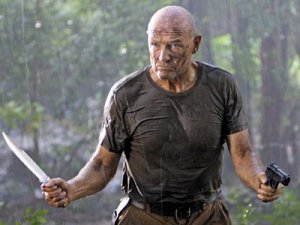 Before crashing on the island in Lost, John Locke (Terry O’Quinn) works at a box company, a paraplegic whose boss belittles him for playing military role-playing games. But on the island, Locke’s strange interests make him the island’s resident hunter and strategist — a leader, even. The island miraculously cures him of his handicap, sparking a sort of desperate mysticism in him that fuels many of his questionable decisions throughout the series.
It’s hard to know whether to trust him or not. He lies that he’s out hunting every day when he’s really investigating a mysterious hatch. He drugs another survivor and ties him up to educate him about his weaknesses. He sabotages an attempt to transmit a distress signal from the island. (And that’s just the first season.)
But as easy as it is to distrust Locke, his backstory is a tear-jerker that garners tons of sympathy. To be honest, no TV show has ever made me feel such raw pity for a character. Yet when watching Lost for the first time, I wasn’t sure whether he was some sort of spiritual leader or a complete nutcase. (The other survivors weren’t sure either.) That ambiguity and his history of being victimized give John Locke an emotional appeal I’ve yet to see again on television.
 In Joss Whedon’s cult hit Firefly, Jayne Cobb (Adam Baldwin) started out as one of my least favorite characters. I know I could get in trouble for saying that, but his initial role in the series is as a 6 1/2 foot tall jock who gets into trouble for his crude jokes. Then the show visits his hometown, and he gets way more interesting.
It turns out Jayne has a sordid past as a mercenary and thief, who seems to lack a loyal bone in his body if money is involved. His town deems him a hero for raining stolen money down on them… but he finally admits he was forced to drop the money to make his escape. Later in the series, he mucks up when he tries to sell out the crew — and faces Mal’s wrath for it. (Mal shouldn’t be surprised; he met Jayne at gunpoint and bribed him into switching sides.)
In short, Jayne is a lovable bad guy who works with the good guys. His sense of humor is one of his biggest redeeming qualities. But I can still never be sure whether the temptation of money will be enough to turn him against the rest of the crew — and that makes for some awesomely unpredictable episodes.
3. Adelle DeWitt, Dollhouse
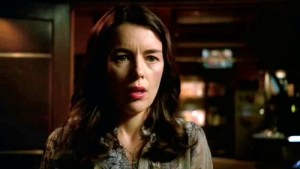 Trying to run a profitable business is no crime, but when that business makes money by wiping its staff members’ memories, implanting new ones and hiring them out for big bucks, things get a little morally complicated. That’s the job of Adelle DeWitt (Olivia Williams) in Joss Whedon’s Dollhouse.
Though at first little more than a cold and careful businesswoman, DeWitt evolves into someone much more fascinating as the series goes on. At times a control freak, she seems fiercely loyal to her staff and wants to protect the “actives” or “dolls” who are implanted with new memories… without losing her clientele, of course. I’m always wondering how far she will go to protect her “dolls,” or whether she’s just trying to keep her business (and herself) on top and out of trouble. At one point, fear does drive her to give up her staff. Sure, it’s cowardice — it may even be cold-hearted — but it’s also vulnerability.
Her most sympathetic card is that this business isn’t just about money; it means something to her. After all, the clients who spend a fortune to hire the “perfect girl” for the weekend are just as lonely as she is. She even hires one of the actives as her lover. And what looks like a few drinks at the beginning of the series later becomes alcoholism — more evidence of her inner stress and unhappiness.
Trust her or not, she is far from being a soulless suit.
2. Dukat, Star Trek: Deep Space Nine
This Cardassian is unquestionably a villain, but his brief moments of redemption make him much more convincing as one. As DS9 producer Ronald D. Moore explains:
He can be charming. He can be generous. He can do the right thing. All of that somehow makes his ‘evil’ actions all the more despicable, because we know that there was the potential in there for him to be a better person.
 Before the start of DS9, Dukat (Marc Alaimo) was head of the Occupation government when Cardassia cruelly occupied the peaceful planet Bajor, mining it for resources and forcing Bajorans to work at labor camps. Once the Occupation ended, he was demoted to captain, or “Gul.” This alone makes him a worthy target for hatred.
But as the series unravels, Gul Dukat reluctantly joins forces with Deep Space Nine and the Federation to fight their shared enemies, such as the Maquis terrorists and the Klingons. Even when he seems beyond redemption — such as when he tracks down his illegitimate half-Bajoran daughter to kill her — he surprises with his ability to do the right thing in the end.
His relationship with Bajoran Major Kira Nerys is one of the most interesting in the series. While he was leading the Occupation, she was fighting for the resistance. When they’re forced to work together in DS9, she is openly bitter about his role in the Occupation. She’s horrified when she learns that he had an affair with her mother. She can never fully trust him — and she shouldn’t. Nevertheless, even she sees his good side on occasion. And the fact that he seems to genuinely like and respect her garners some sympathy for him.
By the time he’s promoted from part-time villain to full-time in season 5, his history of ambiguity makes every poisonous action more gutting. It’s like a would-be friend betraying you, and it hurts beautifully.
1. Gaius Baltar, Battlestar Galactica
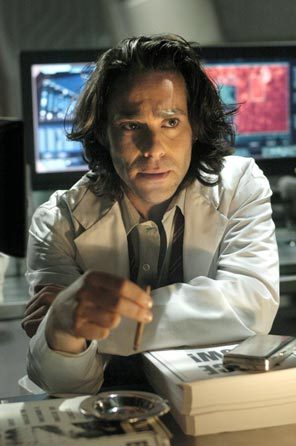 To be fair, Battlestar Galactica has a long list of wonderfully ambiguous characters, but Gaius Baltar (James Callis) is easily the most conflicted in the series. I can never be sure whether I like Baltar, pity him or distrust him… and I know some people just plain loathe him. In love with the enemy, he seems too insecure to decide whether to fight for humanity or turn traitor — and this tightrope walk, for me, is the most breathless part of the show.
Baltar seems to have several personas as he evolves throughout the series, but all are unequivocally him: lovelorn traitor, whiny genius, womanizing president, pompous religious icon to a harem of followers… and those are just the main ones. One minute he’s shaking over moral decisions and trying not to betray the human race; the next, he’s scheming with his Cylon lover, who spends most of the time in his head.
Every time I feel sympathy for him, I’m swatted with his arrogance again, and I have to wonder whether he’s a good guy or too tormented for redemption. I’ll admit that I rooted for him the entire series… I just didn’t know exactly what I was rooting for him to accomplish.
The show asks every view to make his own judgment call on whether Baltar is good, evil or just another flawed human being. That’s what makes him one of those rare characters who lingers in the mind even after the show has concluded.
— Ashley


 Robo♥beat
Leave a comment