
I really wanted to like Netflix’s choose-your-own-adventure experiment Bandersnatch. Part of the Black Mirror series — which features standalone episodes exploring all kinds of futuristic ideas and dark themes — Bandersnatch is about a programmer in the 1980’s trying to create a video game based on his favorite choose-your-own-adventure novel. The cool thing is that the entire episode is a choose-your-own-adventure, something I haven’t experienced before outside of a video game or visual novel (which, let’s face it, is also kind of like a video game).
Spoilers to follow!
 In the story, you follow the young programmer, Stefan, as he makes his game. He also has personal issues you explore — like when he revisits his mother’s death when he was a child, sessions with a therapist, his tense interactions with his dad. There’s so much potential for all of this to be very interesting.
The problem is partly the pacing. It just plods along without much happening. (The show even pokes fun of that at one point, when Stefan and his therapist get into a crazy martial arts battle so they can be more “entertaining” for the viewers.) You make silly decisions, like which music album to listen to and what to have for breakfast. You also make bigger ones, like where to work: at a video game company’s office, or at home by yourself.
That’s where the next trouble is: sometimes it felt like I made the wrong choices. For instance, when I decided that Stefan should work from home instead of from the company’s offices, it led to a boring montage of Stefan programming at home. I felt like I had made the wrong choice, like maybe Bandersnatch didn’t really plan an exciting storyline based on the decision I had made. Maybe the story would have been more action-packed if I had chosen to work at the office. (I haven’t watched Bandernsatch a second time, so I have no idea if I’m right about that or not. I’d be curious to hear from anybody who chose to stay at the office instead of going home!)
There were also a few choices that were literal dead ends: the game prompted me to either “Go Back” or return to a previous point in the story and take things from there. That frustrated me so much. Sure, video games have “Game Over” screens, but I wanted this to be a real choose-your-own-adventure, where every decisions has rich consequences that lead to a different outcome. Instead, I felt cheated. Why give me a choice if there’s only one right answer?
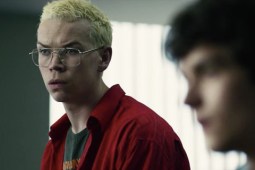 That said, Bandernsatch shines when it comes to exploring ideas — about entertainment, about control, about multiple life paths. One scene I really liked was when Stefan goes to the home of his idol, video game creator Colin. He tells Colin he’s hitting a wall with his game development, so Colin, ever the understanding artist, gives him LSD to loosen up his mind and show him what’s “real”. While high, they stand on a balcony, and Colin prompts Stefan to choose which of them will jump, saying that it doesn’t matter because no choice really matters, there are other lives or worlds out there where they’re walking around making different decisions anyway. I chose to have Colin jump, which led to more story for protagonist Stefan. (My choice was mentioned once, briefly: “Where’s Colin” somebody asked, and it turned out he hadn’t been to work for awhile, nobody had seen him. But that was it.)
In touching on ideas like that, Bandersnatch is definitely thought-provoking. If it wanted to spark conversation, it succeeded. It if wanted to stick around in your mind for awhile after you watch it (or play it?), then it worked.
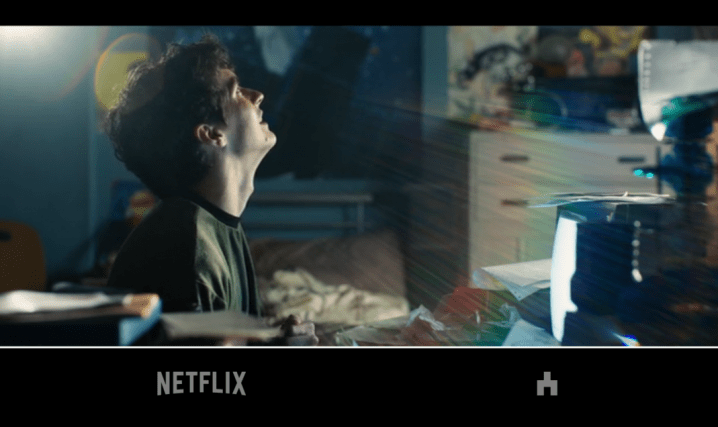 Unfortunately, it just never worked as a story, because there’s not one here, in my opinion. The endings are all over the place, with none feeling rewarding. In one, Stefan talks to you (the viewer) on his computer; you tell him that you’re watching him on Netflix in the 21st century. This leads to the crazy ending I mentioned before, in which Stefan and his therapist get into a kung fu fight so they can provide some real “entertainment”. In another ending, Stefan leans that his dad is part of some big social experiment, and that’s what this whole thing has been — even his mother’s death when he was a kid. (That was weird.)
It’s like the story didn’t actually have an ending. Not a real one, anyway. Maybe that was the point, but it left me feeling disappointed — like the whole thing was not just boring, but shallow too. There was no big emotional payoff for my investment in all of this. Interesting concept, but it was more of a thesis paper than an adventure.
Bandersnatch was still an interesting experiment in the future of television, if we are able to engage with shows and enjoy personalized storytelling. I just think Bandersnatch chose to be tongue-in-cheek about it. Maybe some found it fun, but I’m way more excited to see a deep, moving story told in this way, with multiple routes to take and endings to experience depending on what you choose. No wrong answers. Just an ever-changing story that feels truly alive.
Let’s see what comes next.
— Ashley


 Robo♥beat
Leave a reply to Ashley Hagood Cancel reply